- Mechanism of Action of DNP-BSA
DNP-BSA (2,4-dinitrophenyl-conjugated bovine serum albumin) is a classic hapten-carrier protein complex. As a small-molecule hapten, DNP (2,4-dinitrophenyl) alone cannot induce an immune response. However, when conjugated to the large carrier protein bovine serum albumin (BSA), it becomes a complete immunogen capable of efficiently activating the immune system and inducing the production of DNP-specific antibodies. AbMole’s DNP-BSA (2,4-Dinitrophenyl-Bovine Serum Albumin, M58157) serves as an important immunological tool with broad applications.
AbMole provides global researchers with high-purity, high-bioactivity inhibitors, cytokines, human monoclonal antibodies, natural products, fluorescent dyes, peptides, compound libraries, antibiotics, and other research reagents, widely cited in numerous publications and patents worldwide.
- DNP-BSA in Immunoassays and Immunochromatography
Immunochromatography is a membrane-based detection method that relies on specific antigen-antibody interactions. It utilizes a nitrocellulose membrane as the solid phase, on which a test line (coated with antibody or antigen) is immobilized. The sample solution serves as the mobile phase, while fluorophore- or colloidal gold-labeled antibodies or antigens are immobilized on a glass fiber conjugate pad. Driven by capillary action, the analyte migrates along the test strip. Under the influence of the mobile phase, the analyte first binds to the labeled antibody or antigen and then, upon reaching the test line, binds to the immobilized antibody or antigen, forming a fluorescent or colloidal gold band for detection purposes. However, during production, storage, and transportation, issues may arise with existing immunochromatographic test strips, potentially leading to false-negative results. To avoid false negatives, a control line (C line) is typically included on the nitrocellulose membrane. Common control line systems include the goat anti-mouse polyclonal antibody system and the chicken IgY/goat anti-chicken IgY system. In recent years, DNP-BSA has emerged as a novel control line system of interest. Since 2,4-dinitrophenol (DNP) is a small-molecule compound not found in plants or animals, the DNP-BSA system utilizes anti-DNP antibodies and DNP-BSA to construct the control line, demonstrating excellent stability and low interference. DNP-BSA (2,4-dinitrophenyl-conjugated bovine serum albumin, M58157, AbMole) is suitable for both colloidal gold-based and immunofluorescence-based immunochromatographic detection and is currently an important control system in many immunochromatographic products (e.g., antigen detection, virus detection).
In 2014, two AbMole inhibitors were used in in vivo studies by the Spanish National Center for Cardiovascular Research (CNIC) and Columbia University, leading to publications in Nature and Nature Medicine.
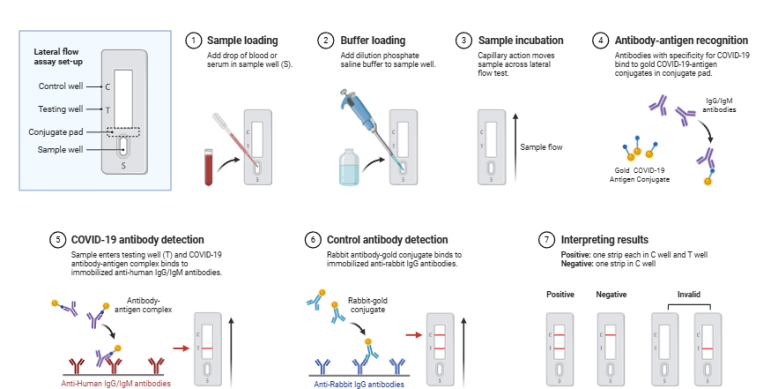
Figure 1. General schematic diagram of immunochromatography.